 Direct
 Sublease
 coworking
Why Optimal Spaces –
|
|
|
Why Use a Tenant Broker: Your Advocate in Commercial Real Estate
1. The Crucial Distinction: Whose Side Are They On?
  2. It Almost Always Costs You Nothing
3. Access to “Hidden” Inventory
4. Negotiating Beyond Base Rent
   5. Time Savings & Process Management
6. Mitigating Risk (the “Gotchas”)
  |
Garment District
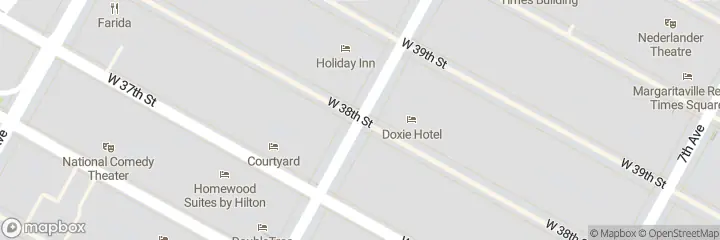
Geographic Boundaries
The Garment District, also known as the Fashion District, spans Midtown Manhattan between Fifth Avenue and Ninth Avenue, extending from 34th Street to 42nd Street. This tightly packed grid serves as the epicenter of New York City's fashion industry, occupying approximately 20 square blocks in one of the most densely populated commercial corridors of Manhattan.
Businesses and Retail Landscape
The neighborhood thrives with fashion-related enterprises, including designers, manufacturers, showrooms, and fabric suppliers. Iconic retailers like Mood Fabrics – popularized by the show Project Runway – anchor the textile trade, alongside B&J Fabrics, Pacific Trimming, and NY Elegant Fabrics. These specialty stores cater to both industry professionals and hobbyists, offering everything from luxury silks to custom buttons.
Dining and Culinary Scene
Keens Steakhouse, a historic chophouse established in 1885, serves dry-aged steaks beneath its famous ceiling adorned with smoking pipes. The Marshal combines farm-to-table dining in a renovated tenement building, while Friedman's offers modern American fare with gluten-free accommodations. Food enthusiasts frequent Hallo Berlin for authentic German sausages and Parm for artisanal sandwiches.
Historical Significance
Emerging in the early 1900s as a garment manufacturing hub, the district once produced 75% of American women's clothing by the 1930s. The 1911 Triangle Shirtwaist Factory fire, though occurring slightly south in Greenwich Village, galvanized labor reforms that reshaped industry standards here. Historic landmarks include the Fashion Center kiosk with its giant needle and button sculpture at Seventh Avenue and 39th Street.
Architectural Profile
The area features early 20th-century loft buildings with large windows designed for textile production, including the 1922 Textile Building at 295 Fifth Avenue. Modern high-rises like 1400 Broadway combine office towers with ground-floor retail. The Art Deco-style Fashion Institute of Technology campus at 227 W 27th Street (just south of the district) influences architectural aesthetics throughout the neighborhood.
Transportation Infrastructure
Sixteen subway lines converge here through stations at 34th Street-Herald Square (B/D/F/M/N/Q/R/W), Times Square-42nd Street (1/2/3/7/A/C/E), and 42nd Street-Port Authority (A/C/E). The Port Authority Bus Terminal and Moynihan Train Hall (Penn Station) provide regional rail connections, while Citi Bike stations and multiple bus routes along Eighth and Ninth Avenues ensure comprehensive transit access.
Postal Zones and Adjacent Areas
Primary zip codes include 10018 (core district) and 10036 (northern section near Times Square). Adjacent postal zones feature 10001 (Chelsea to the south), 10019 (Midtown West), and 10118 (eastern Midtown). These boundaries facilitate cross-district business operations with neighboring garment showrooms and corporate headquarters.
Corporate Presence
Major tenants include global fashion conglomerates like Elie Tahari and Diane von Fürstenberg Studios. Tech-driven showrooms such as Swarovski’s innovation lab coexist with manufacturing hubs like JW Hume, a century-old button maker. While exact addresses frequently change due to commercial leasing patterns, the district maintains about 5,000 fashion-related businesses according to industry surveys.
Notable Structures
The New York Times Building at 620 Eighth Avenue marks the northwest boundary, while the Jacob K. Javits Convention Center looms to the west across Ninth Avenue. The landmark Andrews Building at 354 W 40th Street exemplifies early 20th-century industrial architecture. Recent additions include the glass-clad 1359 Broadway, housing multiple fashion wholesale companies.


