Grand Central Einzelhandel mieten

Erfahrener Mietervertreter „ohne Provision“
Wir vertreten Sie, nicht den Vermieter

Loading map..
  • Direct Grand Central Einzelhandel mieten Direct
  • Sublease Grand Central Einzelhandel mieten Sublease
  • Coworking Grand Central Einzelhandel mieten coworking

Miete Einzelhandel im Grand Central

Class Address SF Monthly Rent
A
E 40th Street & Fifth Avenue
16,500
$ Negotiable
B
Madison Ave & East 44th Street
14,900
$ Negotiable
B
E 42nd Street & Lexington Avenue
4,700
$ 23,200
A
E 42nd Street & Second Avenue
4,500
$ 30,200
C
E 40th Street & Lexington Avenue
2,100
$ Negotiable
C
E 39th Street & Fifth Avenue
2,000
$ 12,400
A
Park Ave & Lexington Avenue
1,900
$ Negotiable
A
Madison Ave & East 41st Avenue
1,700
$ 42,400
B
Madison Ave & East 40th Street
1,600
$ Negotiable
A
Madison Ave & East 41st Avenue
1,000
$ Negotiable
B
Madison Ave & East 40th Street
900
$ Negotiable
B
Lexington Ave & East 40th Street
700
$ 2,200
Class Address SF Monthly Rent
A
E 40th Street & Fifth Avenue
16,500
$ Negotiable
B
Madison Ave & East 44th Street
11,200
$ Negotiable
B
E 42nd Street & Lexington Avenue
4,700
$ 23,200
A
E 42nd Street & Second Avenue
4,500
$ 30,000
C
E 40th Street & Lexington Avenue
2,100
$ Negotiable
C
E 39th Street & Fifth Avenue
2,000
$ 12,200
A
3Rd Ave & East 45th Street
1,800
$ Negotiable
B
Madison Ave & East 39th Street
1,600
$ Negotiable
B
E 40th Street & Madison Avenue
900
$ 11,200
B
Madison Ave & East 40th Street
900
$ Negotiable
Rent Coworking Office
Type of Space Class A/month Class B/month Class C/month
Windowed office/person $ 2029 $ 1250 $ 750
Interior office/person $ 1279 $ 750 $ 500
Team Rooms $ 10029 $ 8000 $ 5000
Suites $ 20029 $ 12000 $ 7000
Class Address SF Monthly Rent
A
Park Ave & East 56th Street
22,300
$ Negotiable
B
Fifth Ave & East 36th Street
16,800
$ Negotiable
B
Third Ave & East 61st Street
7,900
$ 55,800
C
E 33rd Street & Madison Avenue
7,500
$ Negotiable
C
E 33rd Street & Madison Avenue
7,500
$ 45,600
A
Madison Ave & East 69th Street
2,700
$ 19,000
B
Madison Ave & East 40th Street
2,000
$ Negotiable
A
Third Ave & East 54th Street
2,000
$ Negotiable
C
Fifth Ave & West 28th Street
1,800
$ 37,400
C
E 33rd Street & Madison Avenue
1,800
$ Negotiable
A
Madison Ave & East 69th Street
1,800
$ 12,000
B
Madison Ave & East 67th Street
1,600
$ 13,200
B
Madison Ave & East 31st Street
1,000
$ Negotiable
A
Madison Ave & East 49th Street
900
$ Negotiable
Retail Tenants Rented / Leased Grand Central
  • City National Bank leased 35,643 SF at 1140 Sixth Avenue
  • HSBC leased 7,491 SF at 250 Park Avenue
  • Sweetgreen leased 3,500 SF at 10 Grand Central
  • Birch Coffee leased 493 SF at 770 Third Avenue
  • Best Buy leased 40,839 SF at 535 Fifth Avenue
  • First Republic Bank leased 14,430 SF at 1 Grand Central Place
  • Just Baked leased 774 SF at 380 Lexington Avenue
  • Los Tacos No.1 leased 4,133 SF at 125 Park Avenue
  • Little Collins Cafe leased 2,400 SF at 10 Grand Central
  • Midtown Hardware leased 3,463 SF at 815 Second Avenue
  • Le Botaniste leased 1,597 SF at 666 Third Avenue
  • Sweetgreen leased 3,341 SF at 230 Park Avenue
  • Sticky's Finger Joint leased 1,571 SF at 237 Park Avenue
  • Bulee Cafe leased 6,000 SF at 270 Madison Ave

Grand Central

Geographische Grenzen

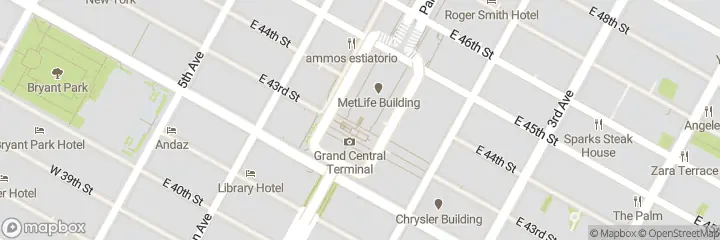
Das Viertel Grand Central umfasst etwa 70 Straßenblöcke in Midtown Manhattan, zentriert um den Grand Central Terminal an der 42. Straße und der Park Avenue. Das Gebiet wird durch Zonen-Subdistrikt-Regeln begrenzt, die angrenzende Grundstücke und solche über Kreuzungen vom Terminal einbeziehen, wobei die Entwicklungsrechte durch Manhattans hochdichte Gewerbegebiete erweitert werden. Wichtige Grenzen erstrecken sich nach außen, um Teile von Murray Hill, Tudor City und den östlichen Rand des Theaterdistrikts einzuschließen.

Geschäfts- und Gewerbelandschaft

Der Grand Central Terminal selbst beherbergt einen lebhaften Mix von über 50 Einzelhändlern und gastronomischen Einrichtungen in seinen Hallen und unteren Etagen. Das Wahrzeichen bietet gehobene Restaurants wie The Campbell Bar (ein restauriertes Büro aus den 1920er Jahren) und mit einem Michelin-Stern ausgezeichnete Sushi-Theken sowie eine weitläufige Markthalle mit handwerklichen Anbietern. Das umliegende Viertel enthält Flagship-Stores internationaler Marken, Finanzdienstleistungsunternehmen und Fachgeschäfte, die sich entlang der Korridore Lexington Avenue und 42. Straße konzentrieren.

Hauptattraktionen und historische Bedeutung

Der 1913 eröffnete Grand Central Terminal, die dritte Version des Bahnhofs, bleibt mit seiner himmlischen Deckenmalerei und der ikonischen vierseitigen Opaluhr das Kronjuwel des Viertels. Der Terminal ersetzte zwei frühere Bahnhöfe aus dem Jahr 1871 und überlebte mehrere Abrissdrohungen, bevor er in den 1990er Jahren restauriert wurde. Angrenzende Wahrzeichen sind die Art-Déco-Spitze des Chrysler Buildings und die Beaux-Arts-Architektur des Pershing Square Viadukts.

Architektonische Zusammensetzung

Das Gebiet präsentiert drei verschiedene architektonische Epochen: Beaux-Arts-Bürgergebäude (Grand Central), Art-Déco-Wolkenkratzer (Chrysler Building, Lincoln Building) und moderne Glastürme (MetLife Building, 200 Park Avenue). Zonenregelungen bewahren niedrige "Luftrecht"-Parzellen um den Terminal, während vertikale Dichte in umliegenden C5-3-Gewerbezonen erlaubt ist.

Verkehrsinfrastruktur

Als Nordamerikas verkehrsreichster Eisenbahnknotenpunkt bedient der Grand Central die 67 Gleise der Metro-North Railroad und verbindet U-Bahn-Linien (4/5/6/7/S) durch ein unterirdisches Labyrinth von Korridoren. Ein Netzwerk von Fußgängertunneln verbindet mit nahegelegenen Bürotürmen, während Citi Bike-Stationen und Taxistände die östlichen und westlichen Flanken des Terminals säumen.

Postleitzahlkonfiguration

Die primäre Postleitzahl für den Grand Central Terminal ist 10017, während angrenzende Gebiete in 10166 (MetLife Building), 10174 (Chase Manhattan Plaza) und 10022 (östlich in Richtung Murray Hill) fallen. Die Postleitzahl 10016 deckt die südlichen Bereiche des Viertels nahe Kips Bay ab.

Unternehmen

Das MetLife Building an der 200 Park Avenue beherbergt Finanzriesen wie KeyCorp und Hedgefonds, während der 245 Park Avenue Investmentfirmen und Anwaltskanzleien beherbergt. Technologieunternehmen unterhalten Satellitenbüros in modernisierten Vorkriegsgebäuden, die mit gemeinnützigen Organisationen in denkmalgeschützten Gebäuden koexistieren.

🤝
Tenant Representation: Optimal Spaces acts exclusively as a "Tenant Broker," only representing tenants, never landlords.
⚖️
Unbiased Service: Avoiding conflicts of interest, they provide impartial service, showing a wider range of properties and negotiating the best price.
🗂️
Comprehensive Process: Agents guide clients end-to-end, offering market surveys, floor plans, pricing expectations, and industry contacts.
🐷
Cost Savings: They negotiate rental price and identify/abate "hidden costs."

Why Optimal Spaces –
Tenant Broker

  • No fee for clients renting space.
  • We work for YOU, not the landlord.
  • Save 15–20% on your business costs.
  • Save 100–200 hours of research.
  • Access to all available spaces.
  • Specialized real estate expertise.

Alone or with other broker

  • Miss deals and hard-to-find spaces.
  • Potential conflict of interest (often represent landlords).
  • Only 10% of available spaces are online.
  • Lack of specialized expertise.
  • May not get the best terms or uncover hidden costs.
Why Use a Tenant Broker: Your Advocate in Commercial Real Estate
1. The Crucial Distinction: Whose Side Are They On?
Landlord Rep (Listing Agent) — Fiduciary Duty: Landlord. Highest rent, best terms for landlord.
Tenant Rep (Tenant Broker) — Fiduciary Duty: Tenant Only. Lowest rent, best terms for tenant. Levels the playing field.
2. It Almost Always Costs You Nothing
3. Access to “Hidden” Inventory
4. Negotiating Beyond Base Rent
Landlord pays the broker fee — free expert representation for the tenant.
Access to hidden inventory: off-market listings, subleases, and future availabilities via broker databases and networks.
Negotiating beyond base rent: free rent, TI allowance, OPEX caps, and lease flexibility for renewal or expansion.
5. Time Savings & Process Management
6. Mitigating Risk (the “Gotchas”)
Tenant broker handles searching, scheduling, and RFPs — your outsourced real estate department with curated options and timeline management.
Mitigating risk: spotting pitfalls in LOI and lease such as restoration clauses and holdover penalties.
Summary: Don’t rely on the landlord’s agent. A tenant broker is your advocate, provides better data, negotiates a complete package, and typically costs you nothing.

Retail Buildings in Grand Central

join our mailing list

Thank you! we will be in touch.
Please enter a valid email address is required. Your email is required to be at least 3 characters That is not a valid email. Please input a valid email. Your email cannot be longer than 20 characters
Please enter a valid email address is required.