Penn Plaza Retail Space for Rent
Expert Tenant Broker
We represent you, not the landlord
 Direct
 Sublease
 coworking
Penn Plaza Retail Space Listings
| Class | Address | SF | Monthly Rent |
|---|---|---|---|
| A | 2 & West 31st Street Floor 2 | 16,700 | $ Negotiable |
| B | 12,400 | $ Negotiable | |
| C | W 32nd Street & Fifth Avenue Floor 11 (full) | 7,500 | $ Negotiable |
| C | W 32nd Street & Broadway Floor 4 | 4,500 | $ 17,000 |
| C | Broadway & West 40th Street Floor 3 (full) | 3,500 | $ Negotiable |
| B | Eighth Ave & Eighth Avenue Floor 1 | 2,500 | $ Negotiable |
| B | W 31st Street & Fifth Avenue Floor 2 | 2,200 | $ 14,600 |
| B | 2,000 | $ 11,000 | |
| C | W 30th Street & Avenue of the Americas Ground floor | 2,000 | $ 11,400 |
| B | Avenue of the Americas & West 31st Street Ground floor | 1,800 | $ Negotiable |
| C | W 33rd Street & Fifth Avenue Floor 1 | 1,500 | $ 24,000 |
| B | W 33rd Street & Fifth Avenue Floor 7 | 1,400 | $ 4,800 |
| A | 1,300 | $ Negotiable | |
| B | Eighth Ave & Eighth Avenue Floor 1 | 1,300 | $ Negotiable |
| C | W 32nd Street & Ninth Avenue Floor 12 | 1,200 | $ 4,400 |
| C | Eighth Ave & West 39th Street Ground floor | 1,100 | $ Negotiable |
| B | W 36th Street & Eighth Avenue Mezzanine (full) | 1,000 | $ 6,200 |
| C | Eighth Ave & West 39th Street Ground floor | 1,000 | $ Negotiable |
| B | W 36th Street & Eighth Avenue Mezzanine (full) | 1,000 | $ 6,200 |
| C | Eighth Ave & West 39th Street Ground floor | 1,000 | $ Negotiable |
| C | W 37th Street & Sixth Avenue Mezzanine (full) | 800 | $ 2,600 |
| C | Fifth Ave & West 31st Street Mezzanine (full) | 700 | $ 6,600 |
| Class | Address | SF | Monthly Rent |
|---|---|---|---|
| A | W 34th Street & Seventh Avenue Ground floor | 11,000 | $ Negotiable |
| A | Fifth Ave & West 33rd Street Floor 2 | 9,200 | $ 23,400 |
| A | Hudson Yards & Eleventh Avenue Ground floor (full) | 2,800 | $ Negotiable |
| A | 1,100 | $ 3,800 |
| Class | Address | SF | Monthly Rent |
|---|---|---|---|
| B | E 49th Street & Second Avenue Plaza District · Lower level | 2,100 | $ 8,600 |
| B | E 59th Street & Second Avenue Plaza District · Floor 5 | 2,000 | $ Negotiable |
| A | Eleventh Avenue & West 27th Street Chelsea · Floor 1 | 2,000 | $ Negotiable |
| A | Park Ave & East 34th Street Murray Hill · Mezzanine | 2,000 | $ 13,200 |
| A | Park Ave & East 40th Street Grand Central · Mezzanine (full) | 2,000 | $ Negotiable |
| C | W 26th Street & Eleventh Avenue Chelsea · Penthouse | 1,600 | $ Negotiable |
| B | W 43rd Street & Seventh Avenue Times Square · Floor 1 | 1,500 | $ Negotiable |
| A | Madison Ave & East 32nd Street NoMad · Ground floor | 1,100 | $ Negotiable |
| A | W 47th Street & Avenue of the Americas Times Square · Ground floor | 1,100 | $ 6,200 |
| A | Madison Ave & East 49th Street Plaza District · Ground floor | 900 | $ Negotiable |
| B | E 58th Street & Third Avenue Midtown East · Floor 1 | 900 | $ 7,400 |
| A | W 43rd Street & Eighth Avenue Times Square · Ground floor | 700 | $ Negotiable |
Retail Tenants Rented / Leased Penn Plaza
- Ulta Beauty leased 12,040 SF at 2 Herald Square
- AMC Theatres leased 95,341 SF at 312 West 34th Street
- Bobby Khorrami leased 1,817 SF at 251 West 30th Street
- Juice Press leased 568 SF at 2 Penn Plaza
- Starbucks leased 1,251 SF at 330 West 34th Street
- Old Navy leased 78,000 SF at 144 West 34th Street
- Candytopia leased 24,881 SF at 401 Seventh Avenue
- Caf? Nunez leased 6,177 SF at 240 West 35th Street
- Starbucks leased 2,936 SF at 1 Penn Plaza
- BMT Food Inc. leased 1,000 SF at 369 West 34th Street
- Starbucks leased 1,200 SF at 494 Eighth Avenue
- Forever 21 leased 43,000 SF at 435 Seventh Avenue
- Target leased 43,000 SF at 112 West 34th Street
- Market Crates leased 2,300 SF at 224 West 35th Street
Why Optimal Spaces Tenant Broker
- Lease negotiation: full terms, renewals, expansion options
- Cost analysis, inventory identification, negotiating scope
- Risk mitigation against hidden pitfalls
Cost Savings
- Negotiate 30+ leasing points to prevent hidden costs
- Save 10–15% on total leasing costs
- Save 100–200 hours filtering unviable spaces
- Property access via broker databases and networks (off-market, subleases, future availability)
Alone or With Other Brokers
- Managing agents owe a fiduciary duty to landlords, seeking maximum price and terms rather than tenant savings.
- Inherent conflict of interest as most brokers represent landlords
- Risk of weaker terms and overlooked hidden costs
- Heavy workload falls on you while best spaces are missed
About Penn Plaza
Geographic Boundaries
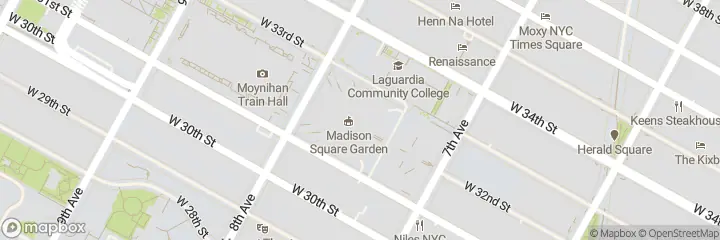
Penn Plaza is located in Midtown Manhattan, spanning the area around Pennsylvania Station and Madison Square Garden. While the exact boundaries are fluid, it centers on the blocks between 7th and 8th Avenues from 31st to 34th Streets. The neighborhood overlaps with parts of Midtown South, which historically stretched from 9th Avenue to Madison Avenue between 30th and 34th Streets. One Penn Plaza itself sits between 33rd and 34th Streets west of Seventh Avenue.
Businesses, Retailers, and Restaurants
The Penn Plaza area functions as a commercial hub with ground-floor retail spaces in its office towers. One Penn Plaza previously housed a three-story Kmart until its 2020 closure, leaving large retail vacancies. Smaller retailers and food vendors cater to commuters and office workers. While many high-end restaurants cluster nearby in Koreatown or Herald Square, the immediate vicinity emphasizes fast-casual dining options. The underground concourses beneath Penn Station include national chains and coffee shops.
Historical Attractions
Pennsylvania Station’s legacy dominates the area’s history. The original Beaux-Arts station (1910-1963) was demolished to build Madison Square Garden and the current Penn Station. The Farley Post Office building, now partially converted to the Moynihan Train Hall, represents a preservation victory for classical architecture. Madison Square Garden (1968), the current iteration of the arena, remains a major sports and entertainment venue anchoring the district. The 1972-built One Penn Plaza symbolizes the postwar shift toward utilitarian office towers in the district.
Architectural Profile
Mid-20th century skyscrapers define the Penn Plaza skyline. One Penn Plaza (750 ft, 57 floors) features structural steel construction with grey solar glass and anodized aluminum cladding. Its innovative design placed mechanical rooms on the 12th-13th floors instead of the roof, accelerating construction. Buildings typically incorporate underground parking and direct pedestrian connections to transit facilities. 15 Penn Plaza (Vornado Tower), once planned as a supertall office building on the Hotel Pennsylvania site, was not built.
Transportation Infrastructure
Penn Station serves as the nation’s busiest transit hub, handling Amtrak, NJ Transit, Long Island Rail Road, and NYC Subway lines (A/C/E/1/2/3). 44 elevators in One Penn Plaza facilitate vertical circulation, while underground passageways link directly to transit concourses. Multiple bus routes stop along 7th and 8th Avenues, and Citi Bike stations surround the complex. Paratransit services and taxi stands operate at station entrances.
Zip Codes
One Penn Plaza holds ZIP code 10119, with adjacent buildings like 2 Penn Plaza using 10121. Surrounding areas fall under 10001 (Chelsea) to the south and west, 10016 (Murray Hill) to the northeast, and 10018 (Garment District) to the north. The Moynihan Train Hall shares the 10001 code with the main Penn Station complex.
Corporate Tenants
While specific tenants fluctuate, Penn Plaza office towers traditionally attract legal, financial, and media firms. One Penn Plaza’s upper floors house medium-to-large enterprises requiring proximity to transit. Vornado Realty Trust, developer of 15 Penn Plaza, exemplifies the real estate firms drawn to the area. Tech-adjacent companies increasingly occupy renovated spaces, though traditional industries remain predominant.
Urban Design Features
The district prioritizes pedestrian connectivity through underground concourses linking Penn Station to surrounding office towers. One Penn Plaza’s western plaza uses steam jets in winter and fog systems in summer instead of traditional fountains to minimize wind-driven water spray. Street-level design emphasizes high-volume foot traffic management, with wide sidewalks and minimal green space except for pocket plazas.
Retail Buildings in Penn Plaza
- 100-126 West 33rd Street
- 520 Eighth Avenue
- 500 7th Avenue
- 14 Penn Plaza
- 1372 Broadway
- 512 Seventh Avenue
- 1385 Broadway
- 450 Seventh Avenue
- 463 Seventh Avenue
- 10 West 33rd Street
- 1412 Broadway
- 440 Ninth Ave
- 525 Seventh Avenue
- 530 Seventh Avenue
- 132 West 31st Street
- 950 6th Avenue
- 368 Ninth Avenue
- 481 Eighth Avenue
- 1430 Broadway
- 1333 Broadway
- 333 West 34th Street
- 270 West 38th Street
- 307 West 38th Street
- 31 West 34th Street
- 505 Eighth Avenue
- 30 West 32nd Street
- 1370 Broadway
- 247 West 37th Street
- 550 Seventh Avenue
- 469 Seventh Avenue
- 875 Avenue of the Americas
- 302-306 West 39th Street
- 17-19 West 34th Street
- 475 Tenth Avenue
- 1 Herald Square
- 1040 Avenue of the Americas
- 307 West 36th Street
- 130 West 42nd Street
- 1460 Broadway
- 500 Eighth Avenue
- 1001 Avenue of the Americas
- 575 Eighth Avenue
- 330 Fifth Avenue
- 34 West 33rd Street
- 462-468 Seventh Avenue
- 250 West 39th Street
- 25 West 39th Street
- 116-120 West 32nd Street
- 1384 Broadway
- 213 West 35th Street
- 499 Fashion Avenue
- 218-232 West 40th Street
- 214 West 39th Street
- 545 Eighth Avenue
- 131 West 33rd Street
- 318 West 39th Street
- 230 West 36th Street
- 366 Fifth Avenue
- 240 West 40th Street
- 115-125 West 30th Street
- 141 West 36th Street
- 110 West 40th Street
- 214 West 38th Street
- 315 West 36th Street
- 70 West 36th Street
- 245 West 35th Street
- 240 West 37th Street
- 424-438 West 33rd Street
- 240 West 35th Street
- 209-219 West 38th Street
- 535 Eighth Avenue
- 8 West 40th Street
- 49 West 37th Street
- 390 5th Avenue
- 15 West 37th Street
- 251 West 30th Street
- 358 Fifth Avenue
- 264 West 40th Street
- 255 West 36th Street
- 311-315 W 34th St
- 1270 Broadway
- 404 Fifth Avenue
- 58-64 West 40th Street
- 320 5th Avenue
- 261 West 35th Street
- 142-148 West 36th Street
- 108 West 39th Street
- 344 West 38th Street
- 251 West 39th Street
- 256 West 38th Street
- 327-335 West 36th Street
- 589 Eighth Avenue
- 135 West 36th Street
- 494 Eighth Avenue
- 39-43 West 37th Street
- 5 West 37th Street
- 333 West 39th Street
- 24 West 40th Street
- 147 West 35th Street
- 29 West 35th Street
- 519 Eighth Avenue
- 231-249 West 39th Street
- 265-269 West 37th Street
- 205 West 39th Street
- 330 West 38th Street
- 132-138 West 36th Street
- 242-252 West 36th Street
- 263 West 38th Street
- 1231 Broadway
- 224 West 35th Street
- 257-267 West 39th Street
- 20-28 West 33rd Street
- 260 West 39th Street
- 42 West 39th Street
- 336-342 West 37th Street
- 48 West 37th Street
- 38-40 West 32nd Street
- 862 Avenue of the Americas
- 225 West 37th Street
- 555 Eighth Avenue
- 252-258 West 37th Street
- 237 West 35th Street
- 253 West 35th Street
- 229 West 36th Street
- 230 West 38th Street
- 223-225 West 35th Street
- 320 West 31st Street
- 1261 Broadway
- 247 West 38th Street
- 1237-1239 Broadway
- 248 West 35th Street
- 315-321 West 39th Street
- 48 West 38th Street
- 320-324 West 37th Street
- 347 West 36th Street
- 134-142 West 37th Street
- 148 West 37th Street
- 450 West 31st Street
- 22 West 32nd Street
- 259 West 30th Street
- 43-51 West 36th Street
- 260 West 36th Street
- 55 West 39th Street
- 246 West 38th Street
- 145 West 30th Street
- 247 West 35th Street
- 225 West 39th Street
- 151 West 30th Street
- 131 West 35th Street
- 39 West 32nd Street
- 226 West 37th Street
- 3 West 35th Street
- 212-216 West 35th Street
- 20 West 36th Street
- 29 West 30th Street
- 15 West 39th Street
- 270-276 West 39th Street
- 257-261 West 38th Street
- 363 Seventh Avenue
- 580 Eighth Avenue
- 306 West 38th Street
- 49 West 38th Street
- 350 West 31st Street
- 22 West 38th Street
- 260 West 35th Street
- 250 West 40th Street
- 22-30 West 34th Street
- 230 West 39th Street
- 1220 Broadway
- 7 West 30th Street
- 16-18 West 36th Street
- 37 West 37th Street
- 19-21 West 36th Street
- 39-41 West 38th Street
- 54 West 39th Street
- 286-288 Fifth Avenue
- 34-36 West 32nd Street
- 109 West 38th Street
- 11 West 32nd Street
- 149 West 36th Street
- 110 West 34th Street
- 243 West 30th Street
- 12 West 37th Street
- 36 West 37th Street
- 8-10 West 37th Street
- 202 West 40th Street
- 102 West 38th Street
- 242-244 West 38th Street
- 25 West 36th Street
- 275 West 39th Street
- 1431 Broadway
- 247 West 36th Street
- 256-258 West 36th Street
- 124 West 36th Street
- 306 Fifth Avenue
- 552 Seventh Avenue
- 35 West 31st Street
- 60-64 West 38th Street
- 384 Fifth Avenue
- 43-47 West 33rd Street
✔ We represent only Tenants.
✔ We bid landlords against each other to save you 10-15%.
✔ Weed out bad spaces saving you 100-200 hours.


