Rent Midtown South Retail

Expert Tenant Broker "No Fee"
We represent you, not the landlord

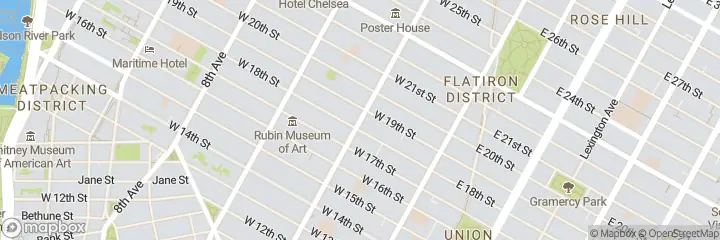
Loading map..
  • Direct Rent Midtown South Retail Direct
  • Sublease Rent Midtown South Retail Sublease
  • Coworking Rent Midtown South Retail coworking

Rent Midtown South Retail

Class Address SF Monthly Rent
Rent Coworking Office
Type of Space Class A/month Class B/month Class C/month
Windowed office/person $ 2023 $ 1250 $ 750
Interior office/person $ 1273 $ 750 $ 500
Team Rooms $ 10023 $ 8000 $ 5000
Suites $ 20023 $ 12000 $ 7000
Class Address SF Monthly Rent
A
Liberty St & William Street
65,500
$ Negotiable
B
Rector St & West Street
31,000
$ Negotiable
B
Beach St & Greenwich Street
6,700
$ 53,800
C
Beekman St & Nassau Street
4,000
$ 30,400
C
Broadway & Bond Street
3,700
$ Negotiable
A
Wall St & South Street
3,300
$ 19,200
A
Liberty St & William Street
1,900
$ Negotiable
B
Maiden Lane & William Street
1,800
$ Negotiable
A
Warren St & Church Street
1,700
$ 13,000
B
Greenwich St & Washington Street
1,600
$ 7,600
C
Broadway & Beaver Street and Exchange Place
1,000
$ 20,800
A
Liberty St & William Street
900
$ Negotiable
B
Thomas St & Thomas Street
600
$ Negotiable
C
Chambers St & West Broadway
500
$ Negotiable
Retail Tenants Rented / Leased Midtown South

Midtown South

Geographic Boundaries

Midtown South's boundaries vary across definitions. The NYPD Midtown South Precinct spans 29th Street to 45th Street between Ninth and Lexington Avenues. In commercial real estate, it often refers to the office submarket between 34th/30th Street and Canal/Chambers Street. Common media definitions place it between 42nd Street (north) and 23rd Street (south), with variations in east-west boundaries: The Wall Street Journal uses Ninth to Lexington Avenues, while The New York Times cites Sixth Avenue to Park Avenue. CityNeighborhoods.NYC describes it as the transitional area between Midtown and the Flatiron District.

Businesses and Retail Landscape

Midtown South serves as a hub for technology startups, creative agencies, and boutique financial firms. The area features a mix of flagship retail stores along Fifth Avenue and Broadway, specializing in luxury goods and fashion. Hudson Yards adds modern retail complexes, while Chelsea maintains art galleries and design showrooms. Fine dining establishments range from Michelin-starred restaurants near Madison Square Park to trendy eateries along the High Line's route.

Historic Attractions

The iconic Flatiron Building (1902), one of NYC's earliest skyscrapers, anchors the southern edge. Madison Square Park, established in 1847, remains a cultural landmark hosting seasonal art installations. The High Line, repurposed from a 1930s freight rail line into an elevated park, attracts millions annually. The Empire State Building (1931), while technically in Midtown, influences the district's northern periphery with its Art Deco architecture.

Architectural Diversity

Building types span converted industrial lofts in Chelsea to glass-clad towers in Hudson Yards. The neighborhood preserves early 20th-century Beaux-Arts structures alongside postmodern additions like the Museum of Sex's adaptive reuse spaces. Mid-rise commercial buildings dominate the central corridors, while residential conversions increase southward toward the Flatiron District.

Transportation Infrastructure

Subway access includes the 1/2/3 (Seventh Avenue), N/Q/R/W (Broadway), and F/M (Sixth Avenue) lines. Penn Station (34th Street) provides Amtrak/NJ Transit services, while the Port Authority Bus Terminal serves cross-regional routes. Citi Bike stations, pedestrian-friendly sidewalks, and proximity to major taxi corridors enhance mobility.

ZIP Code Distribution

Core ZIP codes include 10001 (Chelsea), 10011 (Flatiron adjacent), and 10018 (Hudson Yards). Peripheral codes incorporate 10016 (Murray Hill) and 10010 (Gramercy Park area). The commercial corridor shares borders with 10036 (northern Midtown) and 10003 (East Village proximity).

Corporate Presence

Technology firms like Google maintain offices near Chelsea Market, while media conglomerates occupy refurbished warehouses. Financial technology startups cluster near Madison Square Park, leveraging proximity to traditional banking institutions in Midtown. The area attracts creative professionals through co-working spaces and design-focused enterprises.

🤝
Tenant Representation: Optimal Spaces acts exclusively as a "Tenant Broker," only representing tenants, never landlords.
⚖️
Unbiased Service: Avoiding conflicts of interest, they provide impartial service, showing a wider range of properties and negotiating the best price.
🗂️
Comprehensive Process: Agents guide clients end-to-end, offering market surveys, floor plans, pricing expectations, and industry contacts.
🐷
Cost Savings: They negotiate rental price and identify/abate "hidden costs."

Why Optimal Spaces –
Tenant Broker

  • No fee for clients renting space.
  • We work for YOU, not the landlord.
  • Save 15–20% on your business costs.
  • Save 100–200 hours of research.
  • Access to all available spaces.
  • Specialized real estate expertise.

Alone or with other broker

  • Miss deals and hard-to-find spaces.
  • Potential conflict of interest (often represent landlords).
  • Only 10% of available spaces are online.
  • Lack of specialized expertise.
  • May not get the best terms or uncover hidden costs.
Why Use a Tenant Broker: Your Advocate in Commercial Real Estate
1. The Crucial Distinction: Whose Side Are They On?

Landlord Rep (Listing Agent) — Fiduciary Duty: Landlord. Highest rent, best terms for landlord.
Tenant Rep (Tenant Broker) — Fiduciary Duty: Tenant Only. Lowest rent, best terms for tenant. Levels the playing field.
2. It Almost Always Costs You Nothing
3. Access to “Hidden” Inventory
4. Negotiating Beyond Base Rent

Landlord pays the broker fee — free expert representation for the tenant.
Access to hidden inventory: off-market listings, subleases, and future availabilities via broker databases and networks.
Negotiating beyond base rent: free rent, TI allowance, OPEX caps, and lease flexibility for renewal or expansion.
5. Time Savings & Process Management
6. Mitigating Risk (the “Gotchas”)

Tenant broker handles searching, scheduling, and RFPs — your outsourced real estate department with curated options and timeline management.
Mitigating risk: spotting pitfalls in LOI and lease such as restoration clauses and holdover penalties.
Summary: Don’t rely on the landlord’s agent. A tenant broker is your advocate, provides better data, negotiates a complete package, and typically costs you nothing.

Retail Buildings in Midtown South

join our mailing list

Thank you! we will be in touch.
Please enter a valid email address is required. Your email is required to be at least 3 characters That is not a valid email. Please input a valid email. Your email cannot be longer than 20 characters
Please enter a valid email address is required.